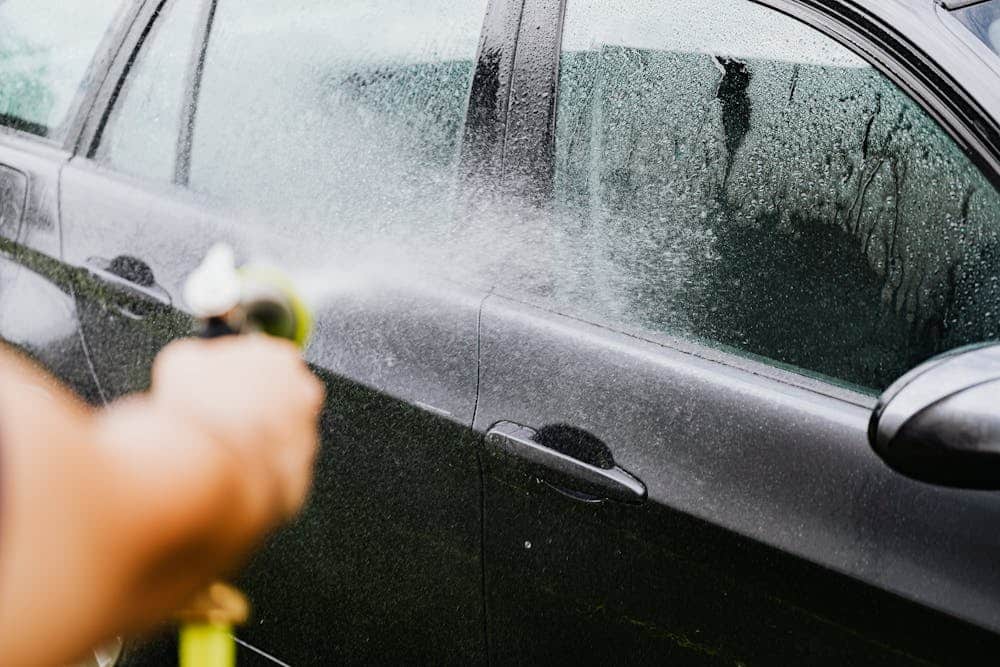
Too often, car paint and overspray can end up on windows, so don’t fuss when it finally happens to you. Sure, it’s frustrating, especially when you’ve just invested in a car wash and detailing.
That said, it’s nothing to lose your cool over. There are a few methods you can try for removing car paint from windows, and fortunately, they’re all pretty easy to do.
Here’s a comprehensive guide on how to get paint off car windows without damaging them. For good measure, let’s start with some common causes of car paint ending up on windows.
Common Causes of Car Paint on Windows
1. Spray Paint Accidents
It’s almost always a case of unfortunate overspray. If you’ve ever sprayed paint without covering the windows, you probably experienced this.
2. Road Construction and Repairs
Road construction and repair projects can also be a culprit for car paint on windows. The machinery used in these processes can cause particles of wet paint to become airborne and land on nearby vehicles.
Road paint splatter is also a common occurrence during road maintenance, and it can easily get onto your car windows while driving through a construction zone.
3. Storm Damage
In extreme weather conditions, such as hailstorms, strong winds can carry debris like pebbles or branches into your car, causing chips or scratches on the paint surface, which may then transfer onto the windows.
Unironically, paint may also fly from random sources, such as people’s backyards or construction zones, during storms and end up deposited on your car windows.
4. Vandalism
Unfortunately, vandalism is a common cause of car paint ending up on your windows. It could be personal, random, or even targeted, but it’s always wasteful, costly, and frustrating.
Vandalism varies, from keyed cars or graffiti to smashed windows. You could also be a victim of unwanted markings on your car, such as spray paint or permanent marker.
Vandalism is a crime, so we recommend reporting it to the police immediately.
The Tools and Materials Necessary for Getting Paint Off Car Windows
1. Safety Gear (Gloves, Mask, Goggles)
At Rite-Way, we always prioritize safety. We insist on safety when you’re on the road and also when getting rid of paint on car windows. You don’t want to compromise your health or well-being while trying to clean up your vehicle.
To prevent any harm, ensure you have the necessary safety gear like gloves, a mask, and goggles before attempting to remove paint from car windows.
2. Razor Blade or Plastic Scraper
A razor blade or plastic scraper can effectively remove paint from car windows. However, this method requires extra caution to avoid damaging the glass.
We’ll discuss how to use these two later.
3. Glass Cleaner
You’ll also need glass cleaner for several stages of the paint removal process. In some instances, it’s all you may need.
You can opt for commercial or homemade auto glass cleaner, just as long as it’s safe for the job. Some glass cleaners are ammonia-based, which can damage car paint and rubber parts.
For a natural alternative, you can dilute white vinegar with an equal amount of water, then put it in a spray bottle. This solution is gentle on glass but tough enough to remove dirt and grime.
Other options include:
- Rubbing alcohol.
- Acetone.
- Specialized overspray remover.
Find out some of the best homemade car window cleaner recipes and processes.
4. Soap and Water
These two mix and lather well, coupling as a duo to remove dirt, grime, and other surface marks.
We’ll encounter them right from the onset.
Step-by-Step Guide: How to Get Paint Off a Car Window
1. Prepare the Window
Your first step should be washing the affected car windows with soap and water. You don’t want to work on dusty auto glass, as it increases the chances of scratching your car window.
Washing also lets you see what washes away and what doesn’t, making it easy to identify stubborn paint marks. Here’s the best way to clean car windows.
2. Douse a Cotton Cloth with Your Choice of Glass Cleaner
The paint on your car window may come off easily if you simply wipe at it with diluted vinegar, rubbing alcohol, or acetone.
This step isn’t a must, but it’s necessary to see if it can end up being that simple. It usually clears paint from children playing with permanent markers on your car.
If the paint doesn’t seem to budge, move on to the next step.
3. Loosen the Paint
Now, let’s get to serious work. You’ll need to loosen the paint before trying to remove it.
Start by rubbing soapy water on the paint stain. After a few soapy rubs and water rinses, spray some of your choice auto glass cleaner so it can soak into the stain.
We recommend acetone for spray paint stains. Let the cleaner sit for about ten minutes before moving on to the next step.
4. Scrape Carefully
You’ve loosened the overpaint remains, even removing some of it, but the stain’s still there. Here’s where the razor blade or scraper we mentioned comes in handy.
Start by scraping off any loosened remains of the overpaint. Avoid scratching the auto glass, so angle the blade or scraper at 40 degrees and go slowly. Work slowly and carefully, using light pressure to remove the remaining overpaint.
5. Rinse and Repeat
Once you’ve scraped off as much of the overpaint as you can, it’s time to rinse the area. All the loose paint particles should come off easily.
After rinsing, inspect the area for any remaining overpaint. If there’s still some left, spray an extra amount of cleaner and repeat the scraping process. Be patient as this step takes some time before all the overpaint clears.
Special Tips for Different Types of Paint
1. Fresh Paint
Wiping off spray overpaint is easiest when the mess is still fresh. The longer you wait after the mess, the more the paint dries and becomes challenging to remove.
As soon as you notice any overspray, quickly wipe it off with a damp cloth or paper towel.
2. Spray Paint
This paint type dries up much faster than wet paint, but it’s also more challenging to remove. If you have a fresh layer of spray paint, use paint thinner or rubbing alcohol to loosen the paint and then wipe it off with a cloth.
If the spray paint has dried already, douse acetone or polish remover on a cotton cloth, and use it to rub on the overspray. However, be careful not to damage any painted surfaces while scrubbing. Acetone is a very aggressive solvent that will quickly damage and strip car paint, clear coats, plastic trim, and rubber seals upon contact. We strongly advise against letting acetone touch anything but the glass and recommend masking off all surrounding areas.
3. Old, Dried Paint
Here’s where your patience is most needed. Removing old, dried paint requires a bit more effort and time. However, it’s doable with the right tools and techniques.
First, start by softening the paint with your chosen cleaner, as we previously agreed. Then, using a scraper or a sharp razor to gently scrape off the paint layer, taking care not to damage the glass.
Enough wipes with rubbing alcohol and razor scrapes will do the job.
At this stage, you might also want to know how to remove stickers from car windows.
What to Avoid When Cleaning Paint Off Windows
1. Avoid Metal Scouring Pads
It’s very tempting to grab the nearest metal scouring pads, especially from the kitchen. These scouring pads are pretty effective at scrubbing away stubborn paint stains on your utensils, but they’ll damage your car windows and paint.
Avoid scratching car windows, which are relatively delicate and prone to scrapes.
2. Avoid Harsh Chemicals, Especially Ammonia
While ammonia is excellent for cutting through grease and grime, it’s not so great for car windows. Ammonia reacts with the rubber components around car windows, such as windshield wipers or door seals, causing them to deteriorate.
That’s why we opted for the cleaners we discussed earlier.
3. Don’t Rush the Scraping Process
Again, it’s important to avoid any potential damage to your car windows. So, take your time when scraping, and do it gently. Remember, excessive force will cause scratching or cracking.
If you come across a particularly tough spot, try using a plastic scraper instead of metal. It will be more gentle on the window surface.
When to Call a Professional
We always recommend that you get a professional as soon as possible if you are not confident in your abilities to safely clean your car windows. Attempting to do it yourself may cause permanent damage, which could be much more costly to repair.
You especially need professionals like Rite-Way Auto Glass if:
1. Paint Has Seeped Into Window Seals or Trim
If you haven’t been meticulous when painting your car, it may have seeped into the window seals or trim. These areas will be difficult to clean and fix without proper equipment and experience.
They’re also very sensitive and could incur damage that causes leaking. A professional can remove any paint safely and completely.
2. DIY Attempts Risk Damaging Your Glass
As previously mentioned, you risk causing damage when trying to remove paint yourself. You could scratch, scrape, or even chip the glass. You could also damage window seals and the trims as well.
Why Rite-Way Auto Glass
Our specialty is restoring car windows to a clear, damage-free condition. We’ve also mastered how to remove scratches from car windows.
We’ve been making your roads safe for 75 years by providing expert auto glass repair and replacement services. Contact us to keep the tradition going.